

Our foundation
-
Built by LINDERA
-
Healthcare AI for mobility
-
Deployed across DACH O&P networks
- ISO 27001 & 13485 certified
At a glance
LMotionLab is a clinical motion-analysis platform used inside the orthotic prescription and fitting workflow.
It produces objective varus/valgus measurements and dynamic gait data that meet the documentation requirements of Medicare's revised Knee Orthoses LCD (L33318), effective 25 January 2026, for braces billed under HCPCS L1843, L1845, L1851, and L1852.
It is sold to orthotic and prosthetic providers, orthopedic groups, and DME suppliers who need to substantiate higher-value knee bracing claims, reduce prior-authorization denials, and shorten audit cycles.
Key facts
- Primary use case in the US: documentation for medial or lateral tibiofemoral osteoarthritis bracing
- Codes supported: HCPCS L1843, L1845, L1851, L1852; CPT 97750 cross-billing
- LCD reference: L33318 (Knee Orthoses), revised effective 25 January 2026
- Target users: O&P clinics, orthopedic groups, DME compliance teams, podiatry practices
- Workflow integration: scan within the standard face-to-face encounter; output attaches to the chart
- Origin: built and clinically validated in Germany; now deployed for the US market
What LMotionLab is
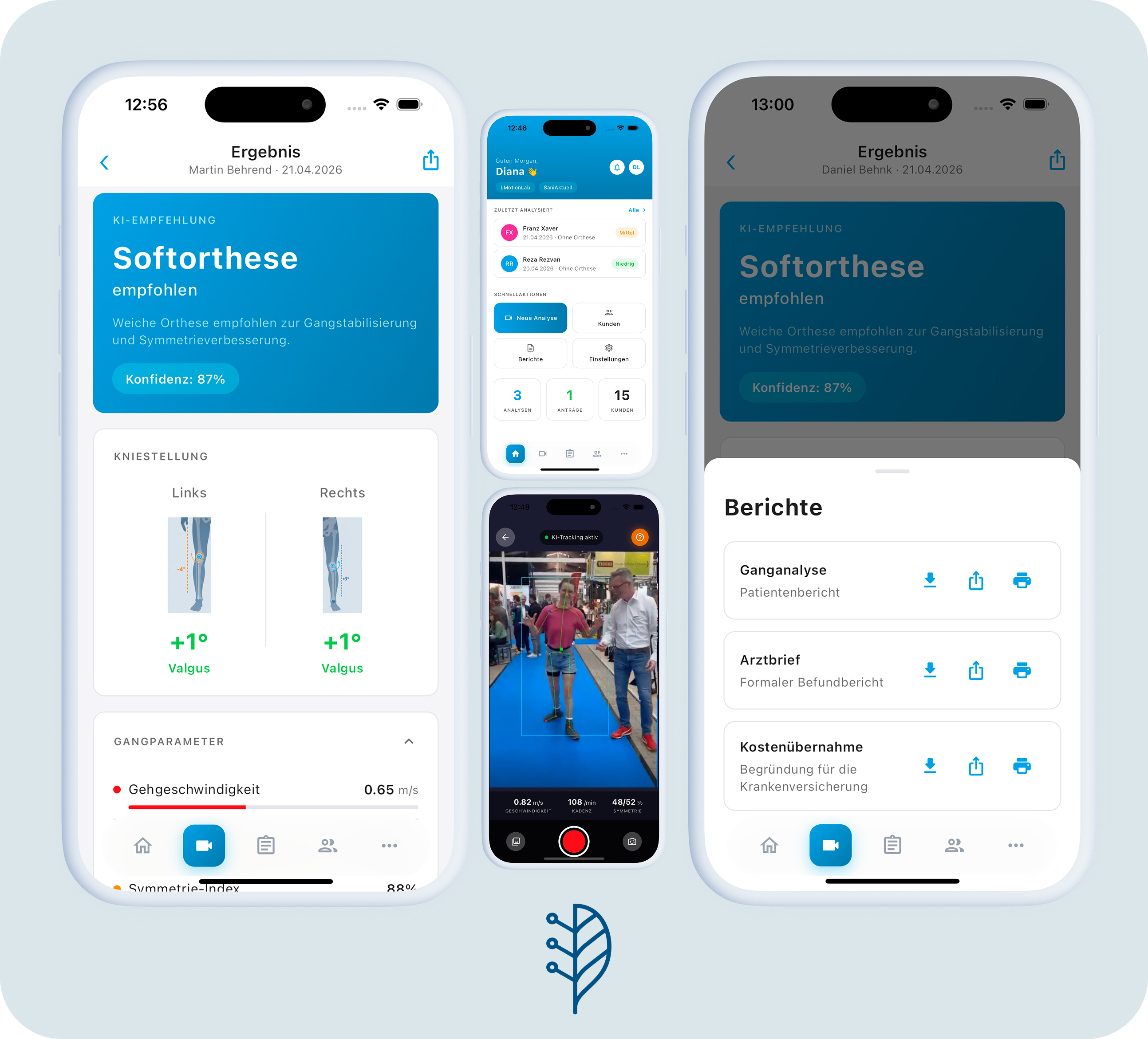
LMotionLab is software for the clinical lower-limb examination room. It captures and quantifies how a patient stands and walks, then produces the structured documentation that orthotic claims and prior-authorization requests depend on.
It is not a research-grade gait laboratory and does not require force plates, marker suits, or a dedicated motion lab. The scan runs inside an existing exam room. The clinician keeps clinical judgment; LMotionLab supplies the objective numbers, the chart attachment, and the audit trail.
The platform was developed by LINDERA, a Berlin-based healthcare AI company specializing in mobility analysis. It is in active commercial use across orthotic and prosthetic provider networks in Germany. The US release focuses the platform on the clinical and billing requirements of the post-LCD-revision Medicare environment.
Why this matters now — the L33318 revision
For most of the last decade, Medicare's Knee Orthoses LCD did not explicitly cover braces prescribed for medial or lateral compartment knee osteoarthritis. The American Orthotic & Prosthetic Association filed a formal LCD reconsideration in 2023. After two years of engagement with the DME MACs, a revised LCD L33318 was issued and is in force for claims dated on or after 25 January 2026.
The revised policy explicitly covers single- and double-upright knee orthoses with varus or valgus adjustment for medial or lateral tibiofemoral osteoarthritis. The codes most affected are L1843, L1845, L1851, and L1852. L1851 and L1852 sit on the Required Face-to-Face Encounter and Written Order Prior to Delivery list, and L1851 also requires prior authorization.
The expanded coverage is a commercial opening. The documentation requirements are the bottleneck. A clinical note that asserts "varus deformity present" without measurement is no longer enough to defend a claim under audit. Providers need a quantified, contemporaneous record. That is the gap LMotionLab is built to close.
How LMotionLab fits the face-to-face encounter
The integration is designed to add no more than three minutes of clinician time per patient. The workflow has four steps.
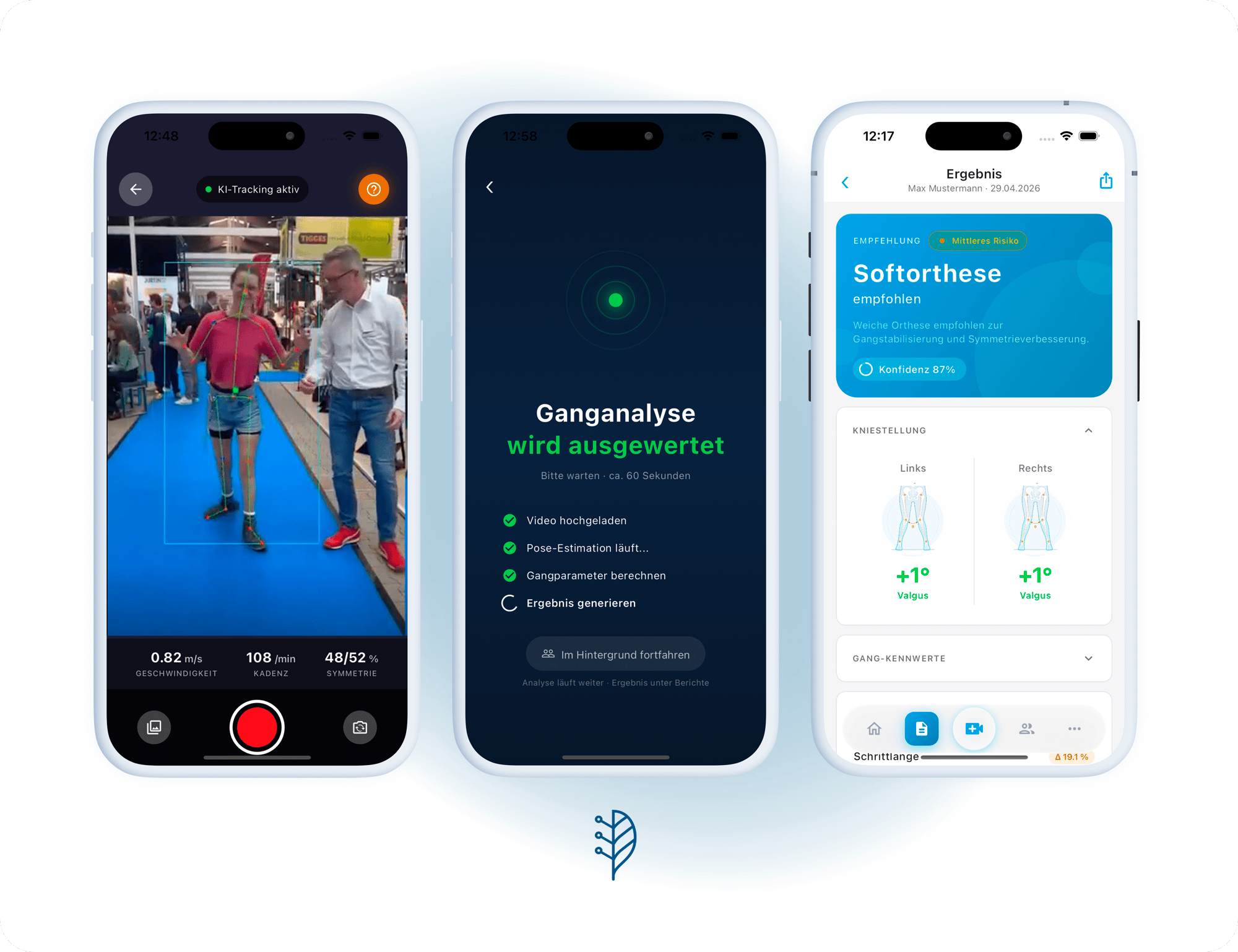
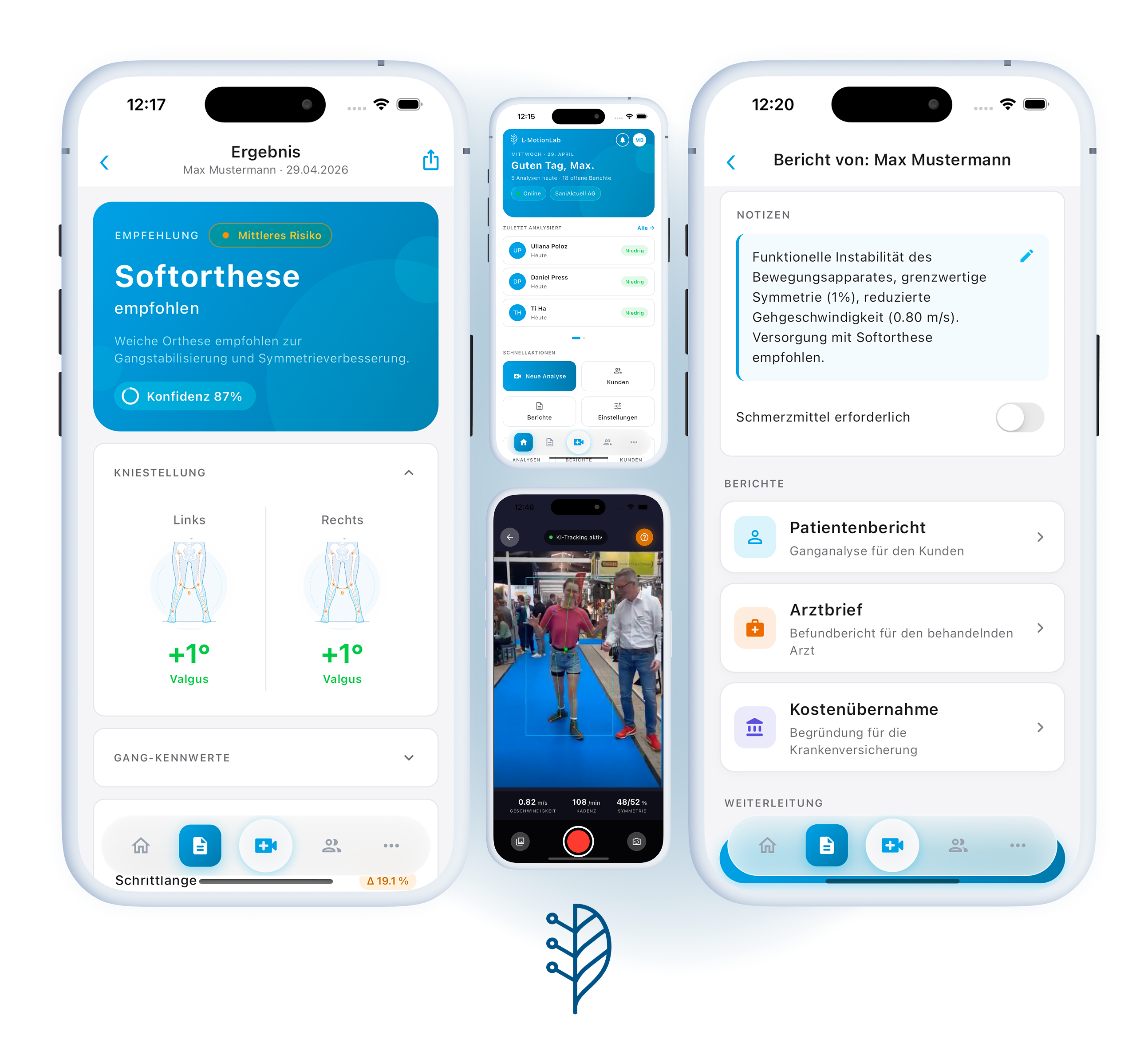
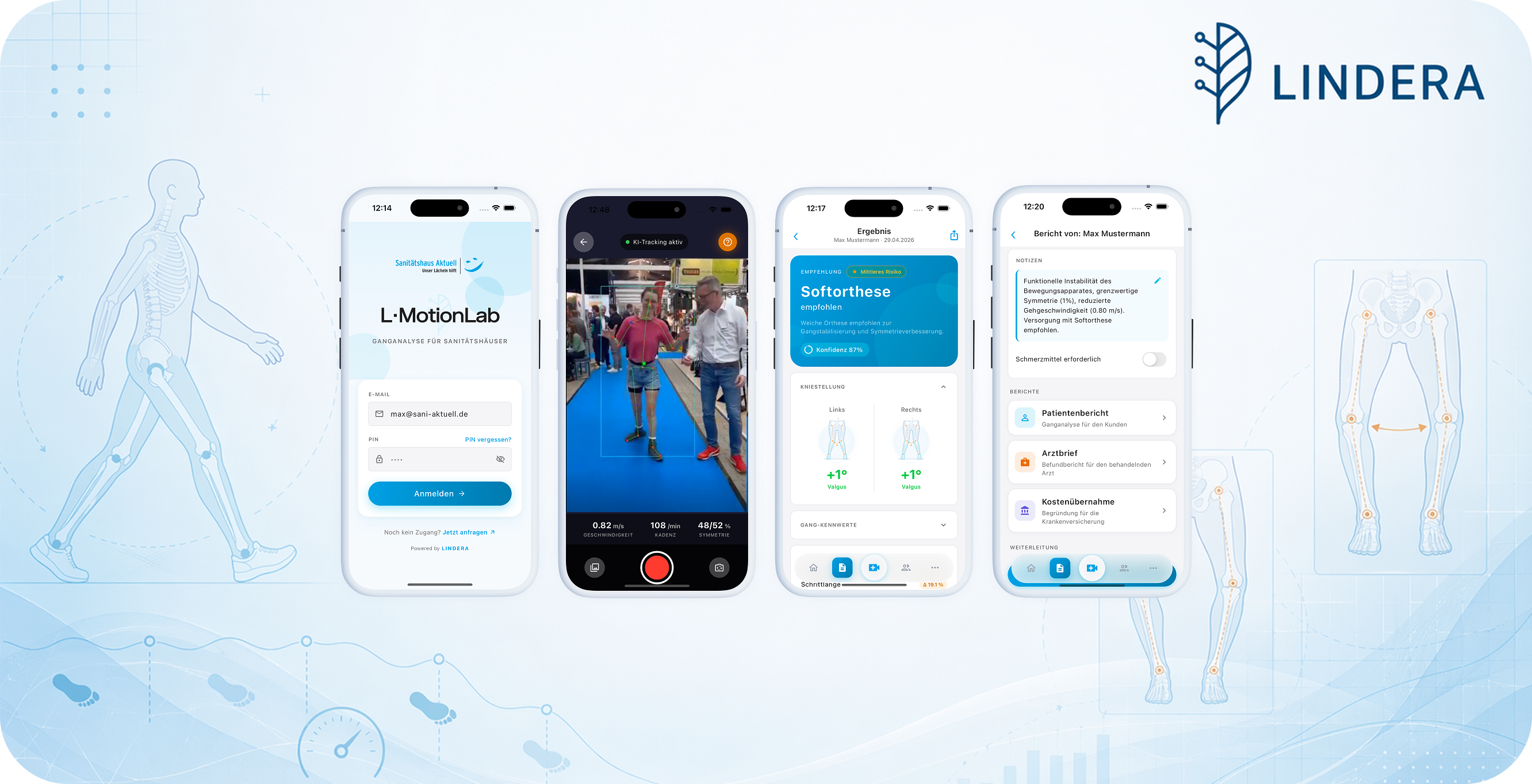
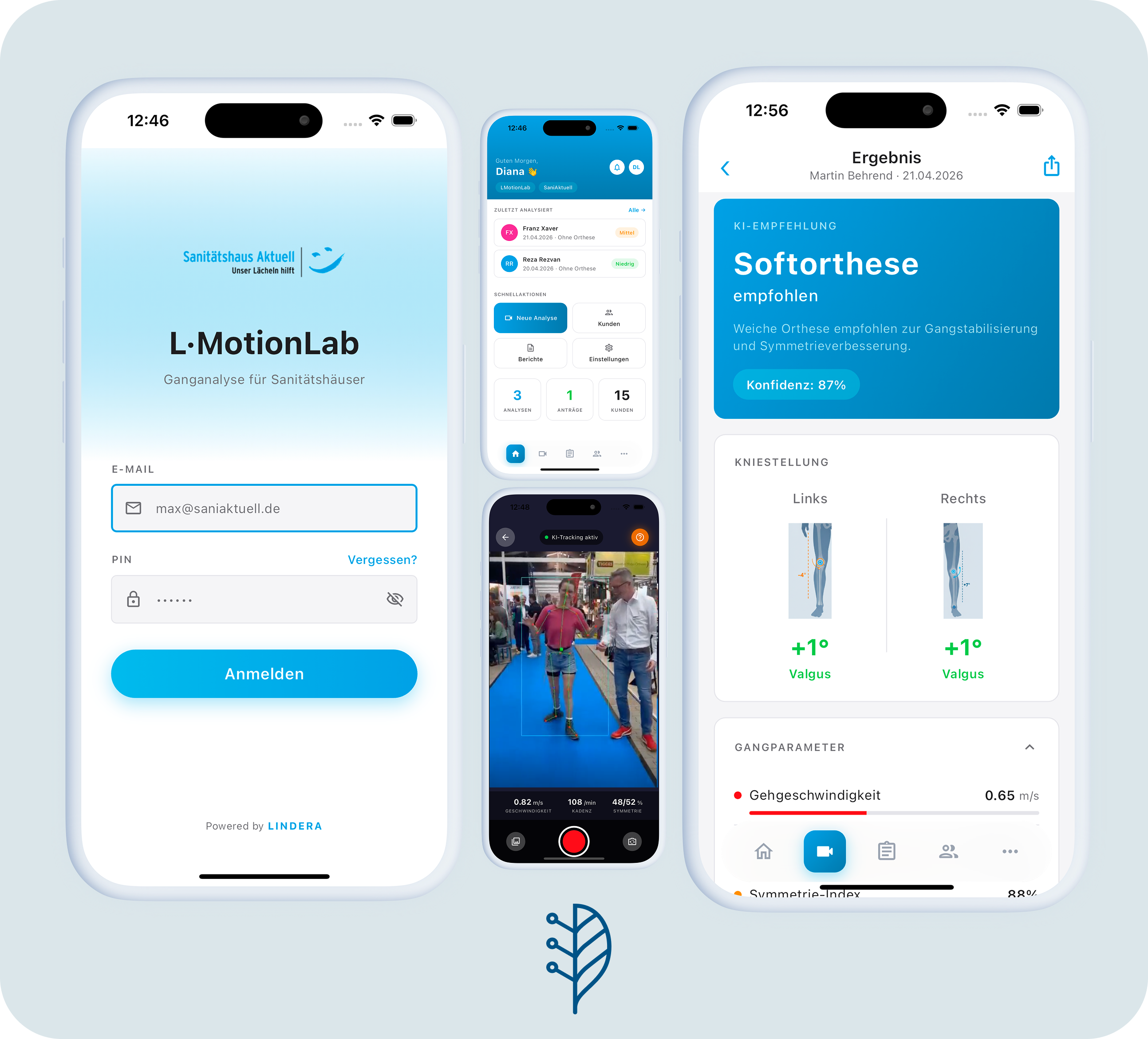
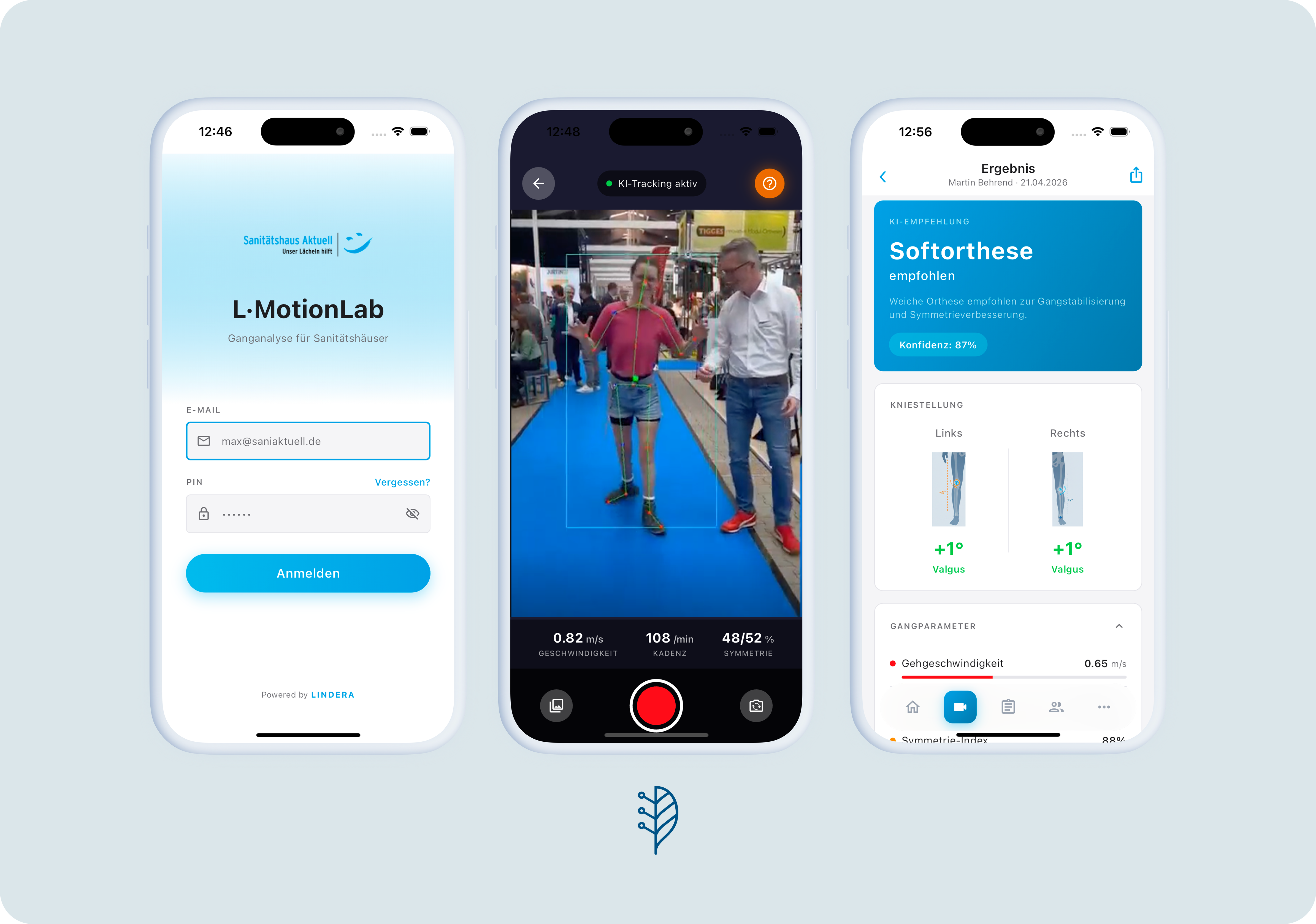
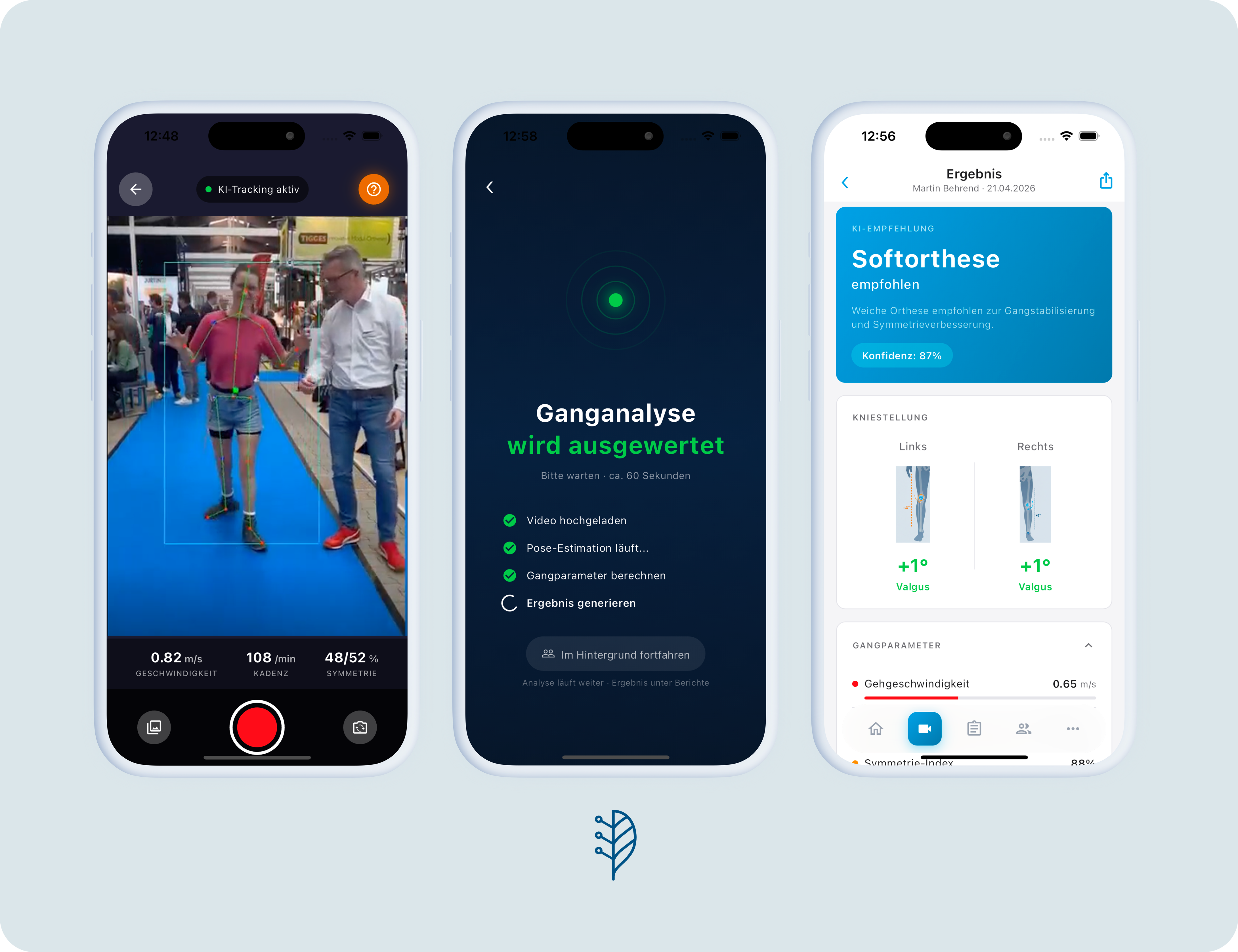
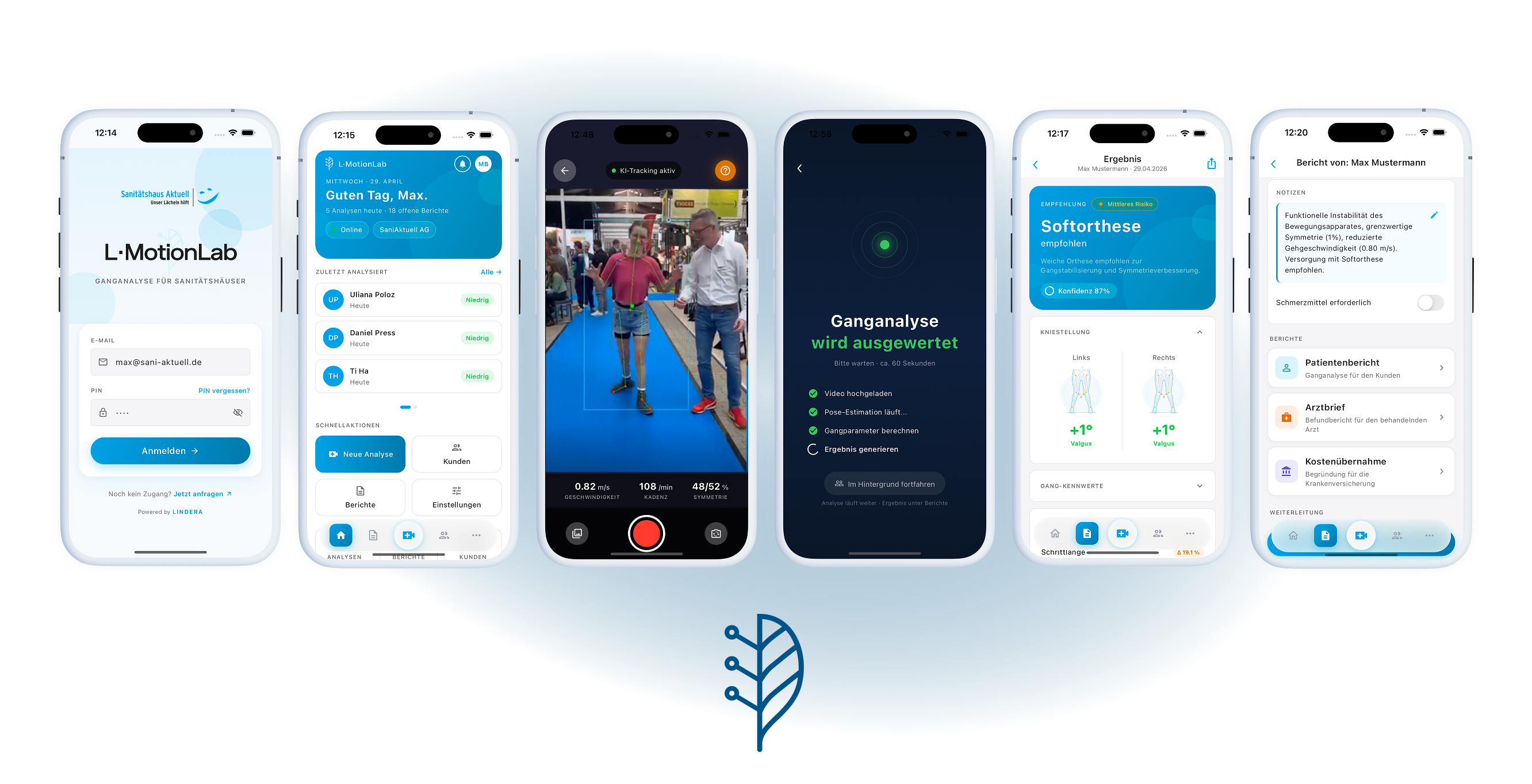
Step 1 — Patient stands and takes a short walk in the exam room. A standard tablet or wall-mounted camera captures the motion. No markers, no instrumented walkway.
Step 2 — LMotionLab quantifies static and dynamic alignment. The software extracts varus/valgus angle, dynamic loading patterns, and gait parameters relevant to the bracing decision.
Step 3 — The clinician reviews and signs the LMotionLab summary inside the encounter. The summary maps directly to the L33318 documentation checklist: diagnosis correlate, malalignment evidence, functional limitation, willingness-to-use note.
Step 4 — The signed summary attaches to the chart and travels with the claim. Output is delivered as a structured PDF and (optionally) an HL7/FHIR payload for EMR integration. The orthotist and the billing team receive the same source artifact.
The result: the face-to-face encounter, the written order prior to delivery, the prior-auth packet, and any subsequent RAC defense reference one consistent, time-stamped, clinician-signed measurement record.
HCPCS codes and billing context
LMotionLab is designed around the four codes most affected by the L33318 revision.
HCPCS L1843 — Knee orthosis, single upright, prefabricated, custom-fitted. Covered for medial or lateral tibiofemoral OA with varus/valgus adjustment under the revised LCD.
HCPCS L1845 — Knee orthosis, double upright, prefabricated, custom-fitted. Same coverage logic. Subject to face-to-face encounter and written order prior to delivery requirements.
HCPCS L1851 — Knee orthosis, single upright, off-the-shelf, with medial-lateral and rotation control, with or without varus/valgus adjustment. Requires prior authorization.
HCPCS L1852 — Knee orthosis, double upright, off-the-shelf, with medial-lateral and rotation control, with or without varus/valgus adjustment. Subject to face-to-face encounter and written order prior to delivery.
CPT 97750 — Physical performance test or measurement, with written report, billed in 15-minute increments. Many practices bill 97750 for the LMotionLab encounter component. CPT 96000–96004 (computer-based motion analysis) may apply in qualified motion-laboratory settings; most O&P and orthopedic settings will use 97750.
For orthotic and prosthetic providers
You already do this work. LMotionLab makes the documentation match the work. The clinical reality of an L1851 or L1852 fitting is unchanged. What changes is what survives a RAC audit, what unlocks a prior-auth approval the first time it is submitted, and what shifts the case mix from L1832 toward the higher-value, varus/valgus-eligible codes the revised LCD now reimburses.
LMotionLab gives the orthotist three things at the point of fitting:
- A quantified varus or valgus measurement, time-stamped and signed inside the encounter
- A dynamic loading record that establishes the medial- or lateral-compartment indication
- A structured documentation packet mapped to the L33318 LCD and the Noridian and CGS Documentation Checklists
A single clinic running eight incremental L1851 fittings per month at a $300–600 net mix-shift uplift recovers the LMotionLab subscription several times over before any denial-avoidance value is counted.
For O&P chains and OPGA member facilities: LMotionLab is positioned as a member-grade platform. Multi-clinic deployment includes shared documentation templates, role-based access for clinical and billing staff, and audit-ready reporting at the chain level.
For orthopedic groups and prescribers
For surgeons, sports medicine specialists, podiatrists, and physiatrists, LMotionLab is a documentation tool, not a clinical replacement.
The face-to-face encounter still belongs to the prescriber. The clinical decision still belongs to the prescriber. LMotionLab adds the structured measurement that turns a clinically obvious case into a claims-defensible chart entry — and, in non-obvious cases, contributes objective alignment data the prescriber can weigh alongside imaging and exam findings.
For orthopedic groups exploring alternatives to total knee arthroplasty in mild-to-moderate medial compartment OA, LMotionLab provides longitudinal alignment and gait data that supports patient counseling, treatment-pathway documentation, and outcomes tracking over time.
CPT 97750 is the most commonly used billing pathway for the LMotionLab encounter component in an orthopedic group setting. Practices with a qualified motion-analysis service line may bill CPT 96000–96004; LMotionLab's data structure is compatible with both.
For DME billing and compliance teams
LMotionLab output is built for the audit, not just the sale.
Each scan produces a documentation packet mapped, line by line, to the L33318 LCD coverage criteria and to the Noridian and CGS DME MAC Documentation Checklists for Knee Orthoses. The packet covers diagnosis correlate, alignment measurement, functional impact, willingness-to-use confirmation, and the signed clinician attestation.
LMotionLab does not opine on legal coverage interpretation. We work with named DME compliance reviewers — including the Van Halem Group — to validate the documentation packet against the live LCD checklist and to confirm audit-defensibility.
For DME suppliers who have been hit by RAC audits on knee orthoses, the LMotionLab record offers two specific advantages: contemporaneous (not back-filled) measurement, and a consistent format across every patient and every clinic.

Clinical evidence and platform credibility
LINDERA's mobility analysis platform is supported by peer-reviewed publications in the gait, fall risk, and digital health literature, including Nature Scientific Reports. The underlying motion-analysis methodology has been validated against gold-standard reference systems and is in active clinical use across DACH orthotic and prosthetic networks.
LMotionLab is built by LINDERA GmbH, a Berlin-based healthcare AI company. LINDERA's platform serves the broader continuum of mobility analysis, gait assessment, and fall-risk reduction across health systems, payers, and care providers.

Pricing
LMotionLab is offered as a per-clinic subscription with optional per-scan add-ons for high-volume sites. Pricing scales with clinic count, scan volume, and integration scope. Multi-clinic O&P chains and orthopedic groups receive enterprise pricing with shared deployment, training, and compliance services.
For a quote tailored to your fitting volume and practice mix: pricing@lindera.de.