
The science behind the measurement.

LINDERA turns a single smartphone video into validated, objective gait and mobility parameters. The method is peer-reviewed and benchmarked against the gold standard. The European evidence base is built — the first US-cohort evidence is the open chapter, and we're looking for the academic partner to co-author it.

mobilitaetsanalyse-lindera-care

The evidence in brief

bmc-geriatrics
Real-world

Fall prevention (closed-loop)

In a PMCF study of 384 residents across 46 nursing facilities, regular-use sites saw a 40% reduction in mean falls per resident (48.5% in the ≥85 subgroup), with 22.4% cognitively impaired residents included, not excluded. (Heinrichs et al. — manuscript currently under peer review at BMC Geriatrics; preliminary.)

Regulatory

What makes the instrument research-grade

One monocular video, no lab.

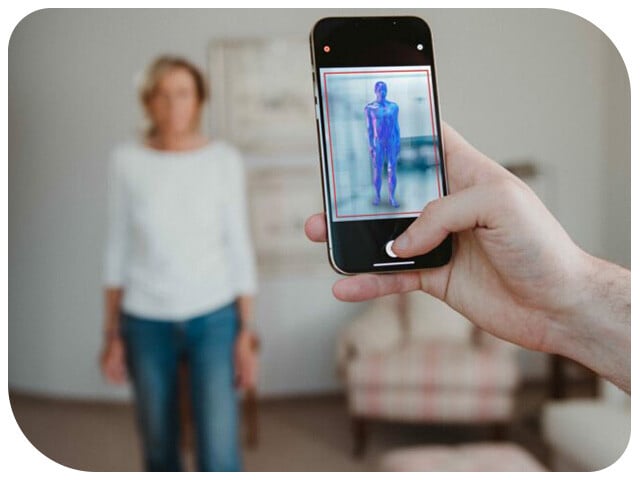
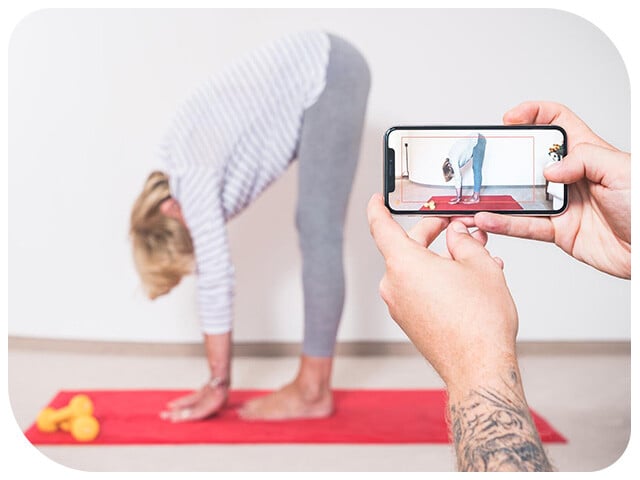
A single smartphone camera — no markers, no wearables, no mats, no force plates, no instrumented walkway. The AI reconstructs validated spatiotemporal and kinematic gait parameters from the video.

Benchmarked to the gold standard.

Validated against GAITRite (instrumented walkway) and against multi-view kinematic reference — the comparators reviewers expect.

Reproducible and scalable.

The same protocol runs identically across sites and raters, which removes inter-rater variability — a measurement property that matters for multi-site study design.

Structured, exportable data.

Objective parameters (gait speed, cadence, step length and symmetry, stride variability, and the full-body battery: Timed Up and Go, sit-to-stand, SPPB) export as structured data for analysis.

A standing recommendation library

derived from validated content — available to research partners for intervention arms.

US note

Patient-specific inference features are subject to FDA clearance; the objective measurement and data capture are available now for research use.

The open chapter: the first US-cohort evidence

lindera-sturzpraevention-pflege

We'll say the quiet part out loud.

Every LINDERA cohort published to date is European. US post-acute and outpatient populations differ — comorbidity burden, pharmacology, care-setting structure, and payment incentives are not the same. The mechanism — objective gait scoring driving earlier intervention and fewer falls — is sound and published. The US effect size has not yet been measured. That is an opportunity, not a caveat.
01-lindera-massnahmenempfehlungen-mobilitaet

What we're proposing

a US academic or clinician-scientist partner co-designs and co-authors the first US-cohort study on LINDERA motion analysis — as a Post-Market Clinical Follow-up (PMCF) site, a prospective validation, or a retrospective real-world analysis. You bring the population and the scientific rigor; we bring a validated, CE-marked instrument, the European evidence base to build on, and the data infrastructure.

lindera-fuer-pflege

Who this is for

  • PT and rehabilitation-science faculty and their departments.
  • Academic health systems and their post-acute networks.
  • Research-active operational PT and home-health groups led by clinician-scientists.
  • Investigators with populations US research underserves — including veterans' and VA-adjacent cohorts.

The prize

the first peer-reviewed US-data publication on smartphone motion analysis for fall risk and mobility — with your name on it.

Why partner with LINDERA

A validated instrument, day one.

You start from a GAITRite-benchmarked method, not an unproven prototype — faster to IRB, faster to data.

Co-authorship and data access.

Shared study design, shared results, publication partnership. Access to structured, analysis-ready data from your own cohort.

A real evidence base to extend.

Five+ peer-reviewed papers and an active study pipeline to cite, replicate, and build on.

No capital equipment.

A smartphone app deploys across sites without procurement or a lab build — which makes multi-site and community-based designs feasible.

Regulatory-grade rigor.

ISO 13485 / ISO 27001 / MDD Class I — the documentation discipline a serious study (and its reviewers) expect.

Proprietary, patent-protected AI — not a commodity pose library

The thing you'd build a study on is purpose-built clinical AI, not a generic consumer pose estimator. LINDERA reconstructs validated 3D gait parameters from a single monocular video — the method that was benchmarked against GAITRite (Azhand et al., 2021) — and it is protected intellectual property, not an open model a dozen vendors share.

Three common models

How a research partnership works

Prospective validation / PMCF

Measure LINDERA against a reference standard, or track outcomes in a defined US cohort over time.

Interventional (RCT / cluster-randomized)

The closed-loop model: objective assessment → targeted intervention → re-measurement, with falls and mobility as endpoints.

Retrospective real-world analysis

Analyze existing, consented LINDERA data or your network's records.

Our scientific partners

Charité Universitätsmedizin Berlin
Katholische Universität Eichstätt-Ingolstadt
Universität Heidelberg

The full evidence base

Peer-reviewed publications

  • Alves, S., Temme, S., Motamedi, S., Kura, M., Weber, S., Zeichen, J., Pommer, W., & Baumgart, A. (2024). Evaluating the prognostic and clinical validity of the Fall Risk Score derived from an AI-based mHealth application for fall prevention: a retrospective real-world data analysis. JMIR Aging, 7, e55681. https://aging.jmir.org/2024/1/e55681

  • Azhand, A., Rabe, S., Müller, S., Sattler, I., & Heimann-Steinert, A. (2021). Algorithm based on one monocular video delivers highly valid and reliable gait parameters. Scientific Reports, 11(1), 14065. https://doi.org/10.1038/s41598-021-93530-z

  • Strutz, N., Brodowski, H., Kiselev, J., Heimann-Steinert, A., & Müller-Werdan, U. (2022). App-Based Evaluation of Older People's Fall Risk Using the mHealth App Lindera Mobility Analysis: Exploratory Study. JMIR Aging, 5(3), e36872. https://doi.org/10.2196/36872

  • Rabe, S., Azhand, A., Pommer, W., Müller, S., & Steinert, A. (2020). Descriptive Evaluation and Accuracy of a Mobile App to Assess Fall Risk in Seniors: Retrospective Case-Control Study. JMIR Aging, 3(1), e16131. https://doi.org/10.2196/16131

  • Stamm, O., & Heimann-Steinert, A. (2020). Accuracy of Monocular Two-Dimensional Pose Estimation Compared With a Reference Standard for Kinematic Multiview Analysis: Validation Study. JMIR mHealth and uHealth, 8(12), e19608. https://doi.org/10.2196/19608

  • Pfannstiel, M. (2025). Künstliche Intelligenz im Einsatz für die erfolgreiche Patientenreise. Springer Fachmedien Wiesbaden. https://doi.org/10.1007/978-3-658-48573-3

Manuscripts under peer review / in preparation

  • Heinrichs, D., Ettrich, M., & Pommer, W. (2026). Digital Mobility Assessment and Fall Prevention in Nursing Care: A Real-World Evidence Study of Closed-Loop Intervention Systems. Manuscript under peer review (BMC Geriatrics).
  • Motamedi, S., Pommer, W., & Baumgart, A. (2025). App-Based Fall Risk Assessment in Elderly Ambulatory Care: Distinguishing Fallers from Non-Fallers in a Retrospective Case-Control Study. In preparation.

Conference Posters & Presentations

  • Alves, S., Temme, S., Motamedi, S., Kura, M., Weber, S., Zeichen, J., Pommer, W., & Baumgart, A. (2025). Mit KI Stürze in der Pflege verlässlich vorhersehen: Das erste Ampel-System – 100% mit Real-World-Daten. Clusterkonferenz 2025: Zukunft der Pflege, conference presentation, March 2025.

  • Alves, S., Kura, M., Paolino, C., Heinrichs, D., Zerth, J., Müller, S. (2024). Efficacy of mHealth Tools in a Multifactorial Approach to Fall Prevention Among Elderly Care Patients: A Cluster-Randomized Controlled Trial. EU Falls Fest 2024, conference poster, April 2024. 

  • Alves, S., Kura, M., Zerth, J., Müller, S. (2023). When do (cluster-)randomized studies hit the mark, and when do they miss it? Intervention studies with mHealth in residential long-term care. Deutscher Kongress für Versorgungsforschung Berlin 2023, conference poster & presentation, October 2023. 

  • Dahms, R., Vorwerg-Gall, S., Heeger, S., Ettrich, M., Heimann-Steinert, A. (2023). AI-based digital healthcare application to manage fall risks in residents of nursing homes in Germany: clinical and resident-reported outcomes. The International Conference on Digital Health and Telemedicine 2023, conference presentation, October 2023.

Contact. Your scientific partnership starts here