
Gait-parameter validity
ICC 0.958–0.987
vs. GAITRite across 514 walking trials in 44 older adults (65–91 yrs). (Azhand et al., Scientific Reports, 2021.)
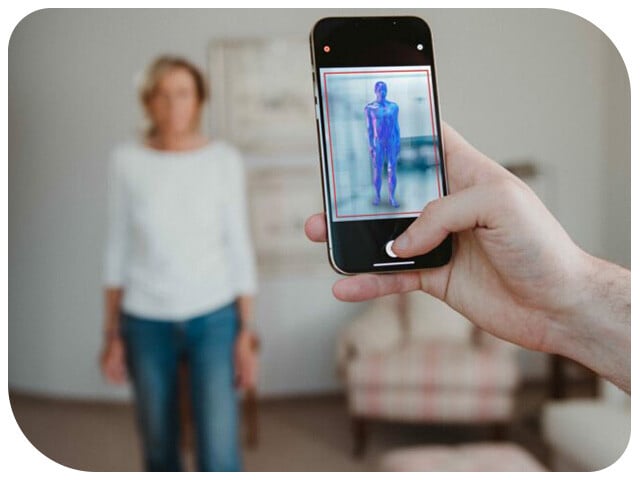
LINDERA turns a single smartphone video into validated, objective gait and mobility parameters. The method is peer-reviewed and benchmarked against the gold standard. The European evidence base is built — the first US-cohort evidence is the open chapter, and we're looking for the academic partner to co-author it.

ICC 0.958–0.987
vs. GAITRite across 514 walking trials in 44 older adults (65–91 yrs). (Azhand et al., Scientific Reports, 2021.)

Monocular 2D pose estimation
Validated against a multi-view kinematic reference standard. (Stamm & Heimann-Steinert, JMIR mHealth uHealth, 2020.)

Prognostic & clinical validity
Established in a retrospective real-world cohort. (Alves et al., JMIR Aging, 2024.)

Fall prevention (closed-loop)
In a PMCF study of 384 residents across 46 nursing facilities, regular-use sites saw a 40% reduction in mean falls per resident (48.5% in the ≥85 subgroup), with 22.4% cognitively impaired residents included, not excluded. (Heinrichs et al. — manuscript currently under peer review at BMC Geriatrics; preliminary.)
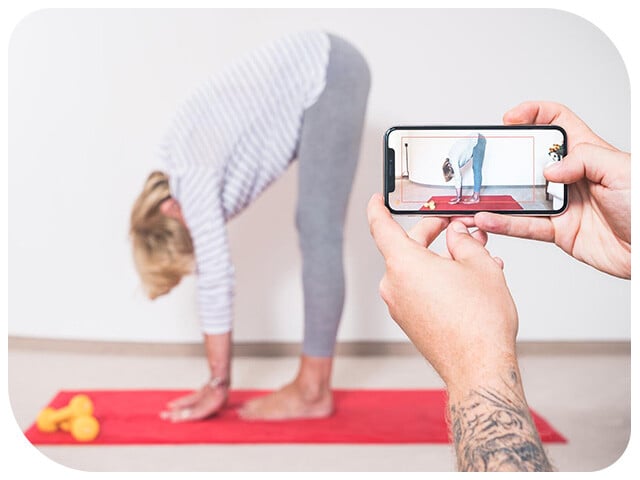
A single smartphone camera — no markers, no wearables, no mats, no force plates, no instrumented walkway. The AI reconstructs validated spatiotemporal and kinematic gait parameters from the video.
Validated against GAITRite (instrumented walkway) and against multi-view kinematic reference — the comparators reviewers expect.
The same protocol runs identically across sites and raters, which removes inter-rater variability — a measurement property that matters for multi-site study design.
Objective parameters (gait speed, cadence, step length and symmetry, stride variability, and the full-body battery: Timed Up and Go, sit-to-stand, SPPB) export as structured data for analysis.
derived from validated content — available to research partners for intervention arms.
Patient-specific inference features are subject to FDA clearance; the objective measurement and data capture are available now for research use.

Every LINDERA cohort published to date is European. US post-acute and outpatient populations differ — comorbidity burden, pharmacology, care-setting structure, and payment incentives are not the same. The mechanism — objective gait scoring driving earlier intervention and fewer falls — is sound and published. The US effect size has not yet been measured. That is an opportunity, not a caveat.
a US academic or clinician-scientist partner co-designs and co-authors the first US-cohort study on LINDERA motion analysis — as a Post-Market Clinical Follow-up (PMCF) site, a prospective validation, or a retrospective real-world analysis. You bring the population and the scientific rigor; we bring a validated, CE-marked instrument, the European evidence base to build on, and the data infrastructure.

the first peer-reviewed US-data publication on smartphone motion analysis for fall risk and mobility — with your name on it.
The thing you'd build a study on is purpose-built clinical AI, not a generic consumer pose estimator. LINDERA reconstructs validated 3D gait parameters from a single monocular video — the method that was benchmarked against GAITRite (Azhand et al., 2021) — and it is protected intellectual property, not an open model a dozen vendors share.
Three common models
Measure LINDERA against a reference standard, or track outcomes in a defined US cohort over time.
The closed-loop model: objective assessment → targeted intervention → re-measurement, with falls and mobility as endpoints.
Analyze existing, consented LINDERA data or your network's records.
Alves, S., Kura, M., Zerth, J., Müller, S. (2023). When do (cluster-)randomized studies hit the mark, and when do they miss it? Intervention studies with mHealth in residential long-term care. Deutscher Kongress für Versorgungsforschung Berlin 2023, conference poster & presentation, October 2023.
Dahms, R., Vorwerg-Gall, S., Heeger, S., Ettrich, M., Heimann-Steinert, A. (2023). AI-based digital healthcare application to manage fall risks in residents of nursing homes in Germany: clinical and resident-reported outcomes. The International Conference on Digital Health and Telemedicine 2023, conference presentation, October 2023.